SuhailSat is Qatar’s flagship satellite, offering high-quality broadcasting and communication services across the Middle East, North Africa, and parts of Europe. Operated by Es’hailSat, the company founded in Doha, SuhailSat represents a major step in Qatar’s ambitions to become a leader in space technology and satellite broadcasting.
Launched to provide secure, reliable, and high-performance satellite services, SuhailSat supports television channels, broadband internet, and secure communications for both governmental and commercial clients.
🚀 On the subject of SuhailSat
The name SuhailSat is inspired by the Arabic name for the Canopus star (Suhail), one of the brightest stars in the sky, symbolizing clarity and excellence.
Currently, the SuhailSat program includes:
-
Es’hail-1 (launched in 2013)
-
Es’hail-2 (launched in 2018)
Both satellites are stationed at 25.5°/26.0° East orbital positions, which makes them ideal for coverage across the MENA region and parts of Europe.
🛰️ SuhailSat Features and Services
SuhailSat offers a wide range of services, including:
-
HD and 4K TV broadcasting: Delivering premium quality video services.
-
Secure communications: Especially important for governmental and military operations.
-
Broadband and internet services: Supporting businesses and ISPs across the region.
-
Media transmission: Used extensively by major TV networks for reliable and clear signals.
Notably, Al Jazeera Media Network and beIN Sports use SuhailSat for their broadcasting services.
📡 How to Receive SuhailSat Signals
Receiving SuhailSat channels is easy if you have the proper satellite dish setup aligned towards the 25.5°/26.0° East orbital slot.
Common Reception Requirements:
-
Satellite Dish Size: 90 cm to 120 cm (depending on your region)
-
LNB: High-quality Universal LNB
-
Receiver: Compatible with DVB-S2, HD, or UHD standards
Example Frequencies:
-
11270 V 27500 2/3 (HD channels)
-
11642 H 27500 2/3 (News and entertainment)
For updated frequencies and detailed setup instructions, FreqSatellite provides the most accurate and latest satellite information.
🌐 SuhailSat Coverage
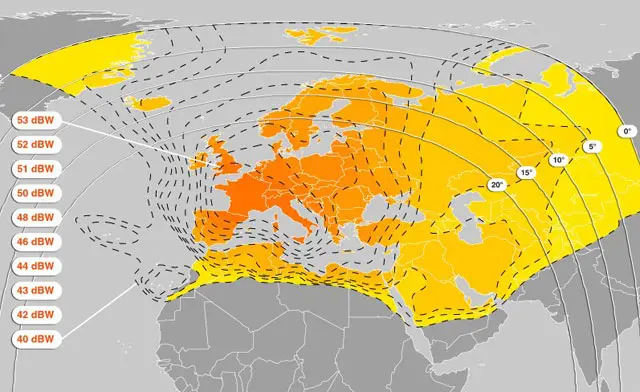
SuhailSat offers excellent coverage over:
-
Qatar
-
Arabian Gulf countries
-
North Africa
-
Levant region
-
Parts of Europe
Its powerful beams ensure a reliable and strong signal quality, even in remote areas.
SuhailSat stands as a symbol of technological innovation in Qatar, providing secure and high-quality satellite services to millions of viewers and businesses. Whether you’re tuning into your favorite TV channels, setting up broadband satellite internet, or managing secure communications, SuhailSat offers a reliable solution.
For full frequency lists, satellite settings, and the latest updates, visit FreqSatellite — your ultimate guide for satellite technology
Correct Way to Enter Channel Frequency
- Choose the correct satellite and transponder.
- Add the frequency manually if not listed.
- Verify signal strength and quality.
- Save the channel once detected.
Steps for Successful Channel Tuning
- Open the receiver’s installation settings.
- Select the satellite associated with the channel.
- Input frequency data precisely.
- Scan and store the channel correctly.
Types of Satellite Receivers
Satellite receivers are the main devices used to access TV channels. They vary in quality, technology, and additional features. Here are the main types:
1. SD Receivers (Standard Definition)
- Receive channels in standard definition (SD).
- Suitable for older TVs or viewers who do not require high-quality images.
- Usually cheaper and easier to use.
- Do not support HD channels or some modern encrypted channels.
2. HD Receivers (High Definition)
- Support high-definition (HD) quality up to 720p or 1080p.
- Provide clearer images and better colors compared to SD receivers.
- Often support both modern encrypted and free channels.
- Require an HD-compatible TV to enjoy full quality.
3. Full HD / 4K Receivers
- Support Full HD 1080p or Ultra HD 4K for the best viewing experience.
- Ideal for watching sports channels and movies in high quality.
- Include modern technologies such as HDR for enhanced colors and contrast.
- Usually more expensive than standard HD receivers.
4. IP / Internet Receivers
- Use an internet connection instead of or in addition to satellite reception.
- Provide access to channels via IPTV or live streaming services.
- Often come with apps like YouTube or Netflix.
- Require a stable internet connection for the best quality.
5. Hybrid Receivers
- Combine both satellite and internet reception (Satellite + IPTV).
- Allow watching traditional satellite channels and online channels on the same device.
- Offer better search and recording options, sometimes with Catch-up TV support.
6. Receivers for Encrypted Channels
- Support encrypted channels using subscription cards or codes.
- Have high-level encryption protection to access paid channels securely.
- Ideal for viewers of packages like BeIN Sports or OSN.
Important Tip: When choosing a receiver, make sure it is compatible with your TV type (SD / HD / 4K), supports the satellites you want to receive, and includes additional features like recording, replay, or IPTV support if needed.
The History of Television: From Mechanical TVs to Smart Screens
Television has evolved significantly since its invention, transforming the way we consume entertainment and information:
1. Mechanical Television
- Early TVs in the 1920s and 1930s used mechanical scanning systems with spinning disks.
- Images were small, low-resolution, and primarily experimental.
- These TVs laid the groundwork for electronic television technology.
2. Electronic Television
- Introduced in the 1940s, using cathode-ray tubes (CRTs) for better picture quality.
- Allowed broadcasting of standard black-and-white and later color programs.
- Became widely accessible to households, increasing TV’s popularity.
3. Digital and High-Definition TVs
- Digital television emerged in the late 1990s and 2000s, offering improved clarity and more channels.
- High-definition (HD) TVs provided sharper images and better sound quality.
- Transitioned from analog to digital broadcasting for efficiency and quality.
4. Smart Screens and Modern Televisions
- Modern smart TVs connect to the internet, providing streaming, apps, and interactive features.
- Support for 4K and even 8K resolution offers ultra-clear images.
- TVs now serve as entertainment hubs integrating content, gaming, and communication.
Overview of Satellites and Their Use in Satellite Broadcasting
Satellites are artificial objects launched into space to orbit the Earth and facilitate communication, navigation, weather monitoring, and broadcasting. One of their most important applications is satellite television broadcasting, which allows signals to be transmitted over vast distances to homes worldwide.
Early Use of Satellites in Broadcasting
- The first communication satellites were launched in the 1960s, enabling long-distance radio and TV transmissions.
- Early satellite broadcasts were primarily experimental, testing signal transmission between continents.
- By the 1970s, satellites began regular TV broadcasts, reaching regions previously inaccessible.
- Initial broadcasts were in analog format, with limited channels and image quality.
Evolution of Satellite Broadcasting
- The 1980s and 1990s introduced digital satellites, improving signal quality and enabling more channels simultaneously.
- High-definition (HD) broadcasting became possible with advances in compression and satellite technology.
- Modern satellites support thousands of channels, including sports, news, movies, and international content.
- Satellites now also enable interactive TV services, internet access via satellite, and encrypted channels for subscription-based content.
Importance of Satellites in Broadcasting Today
- Provide global coverage, reaching remote and rural areas where terrestrial signals are weak or unavailable.
- Support a wide range of TV services, from free-to-air channels to premium subscription packages.
- Play a critical role in modern communication infrastructure, connecting millions of viewers to news, entertainment, and educational content.